
Learn Smarter with Proven Study and Memory Techniques
Explore expert guides on spaced repetition, flashcards, active recall, memorization, language learning, and effective study habits. Discover practical strategies to learn faster, retain more, and improve long-term memory.

How to Learn Idioms and Phrasal Verbs Effectively
Learn expressions with their meaning, grammar, register, and real context—then practise recalling and using them.
Read article
Image Occlusion Flashcards for Anatomy, Diagrams, and Maps
Learn how to turn labeled images into focused recall prompts, avoid misleading cues, and match each card to the skill you need.
Read article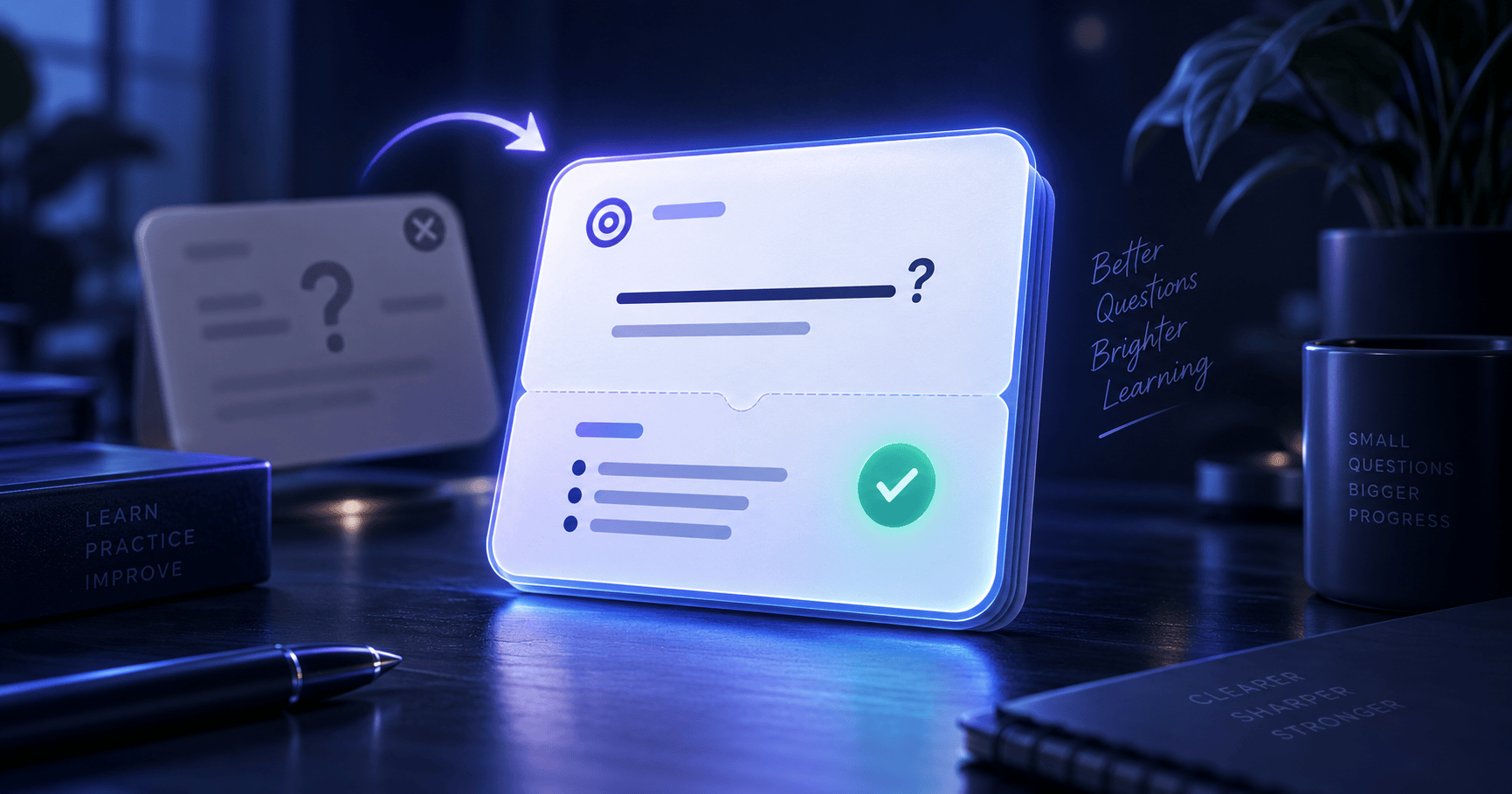
How to Write Effective Flashcard Questions
Learn how to write clear, focused flashcard prompts with concise answers, practical examples, and a checklist for reliable self-testing.
Read article
Habit Stacking for Study: Build a Reliable Review Routine
Learn how to attach a short study session to a reliable daily cue, choose a realistic action, and adjust the routine when life changes.
Read article
Group Study vs Solo Study: Which Is More Effective?
Compare group and solo study, learn when each format is useful, and build a practical plan with individual preparation, structured discussion, and self-testing.
Read article
Grammar Flashcards: Learn Rules Through Context
Use short, contextual prompts to practise choosing and producing grammar—not just reciting definitions.
Read article
False Friends in Language Learning: How to Learn Them
Learn to recognize misleading word pairs, verify their meanings, and practise them in context.
Read article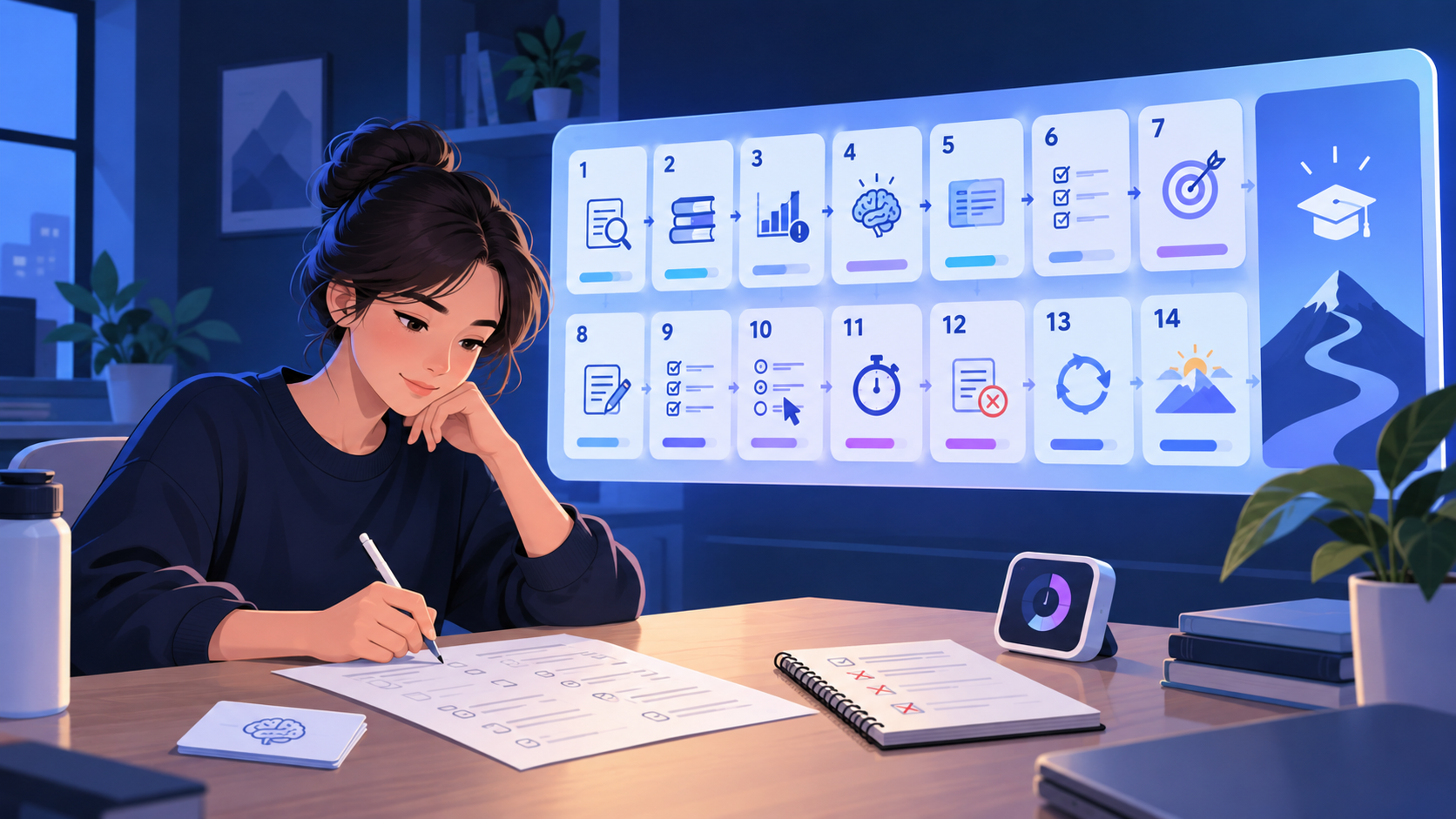
2-Week Exam Study Plan: A 14-Day Schedule
Use a practical day-by-day schedule to prioritize weak topics, space reviews, run mock exams, correct errors, and prepare without last-minute cramming.
Read article
Employee Onboarding Training With Spaced Repetition
Use retrieval practice and spaced review to reinforce selected onboarding knowledge while keeping real-task practice, feedback, and current procedures in the training plan.
Read article
How to Build a Daily Study Habit That Lasts
Build a realistic daily study habit with a stable cue, a small minimum session, prepared materials, and a practical plan for missed days.
Read article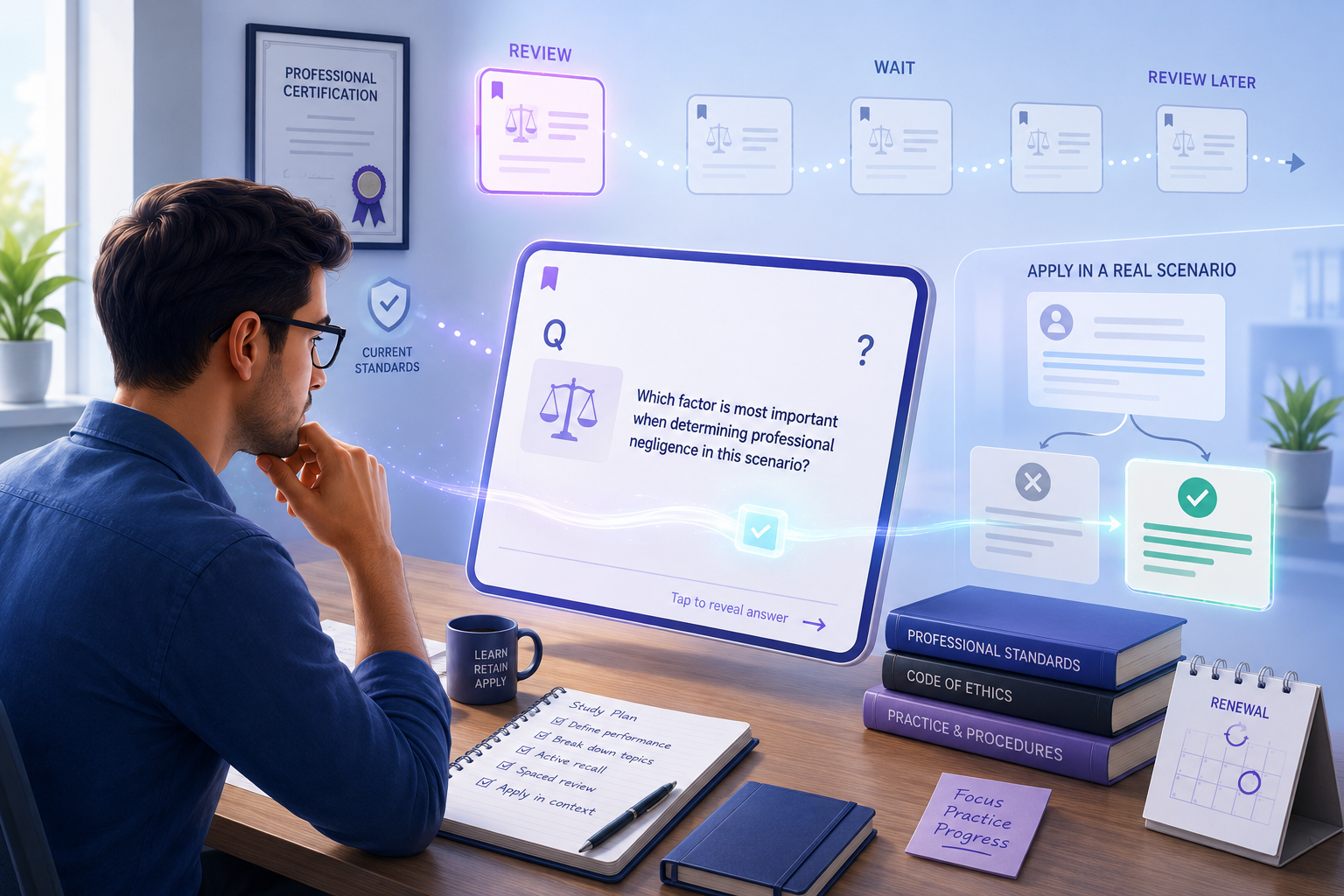
Flashcards for Continuing Education and Certification Study
Use focused prompts, retrieval practice, and spaced review to support continuing education and certification study.
Read article
Why Employees Forget Compliance Training — and How to Make It Stick
Learn why employees forget compliance training after completion and how realistic scenarios, feedback, and reinforcement can improve retention.
Read article
Cloze Deletion Flashcards: When Fill-in-the-Blank Cards Work
Learn when cloze deletion flashcards are useful, how to write clear blanks, and when to choose a direct question instead.
Read article
Chronotype Learning: Study at the Best Time for Your Brain
Learn how chronotype, sleep, and daily alertness can guide study timing without treating one hour as universally best.
Read article
Best Time to Study Flashcards: What Actually Matters Most
Find the best time to study flashcards by comparing consistency, alertness, sleep, context, and review timing instead of chasing one perfect hour.
Read article
Emotional Memory: Why Vivid Experiences Are Easier to Remember
Discover why emotional events stay vivid—and how meaning, surprise, retrieval, and spacing can make learning more memorable.
Read article
Memory Consolidation: How the Brain Turns Learning Into Memory
Follow a new memory from encoding to long-term storage—and see how sleep, retrieval, and spaced review make learning last.
Read article
Neuroplasticity: How the Brain Changes When You Learn
See how learning physically reshapes neural pathways—and why regular, effortful practice turns fragile knowledge into lasting memory.
Read article
Working Memory vs Long-Term Memory: What’s the Difference?
See how your limited mental workspace differs from durable memory—and choose study strategies that turn new information into knowledge that lasts.
Read article
Metacognition: How to Stop Confusing Recognition With Memory
How to judge your real level of knowledge instead of mistaking familiarity for memory, using metacognition and simple self-assessment techniques.
Read article
The Spacing Effect: Why Gaps Between Repetitions Beat Massed Practice
Why repetitions spread out over time build far stronger memory than cramming them together — the research, the ideal gap length, and how to apply it.
Read article
Dual Coding Theory: Why Text Plus Image Boost Memory
Why pairing text with a relevant image creates two independent memory pathways — the science of dual coding theory, and how to apply it to your flashcards.
Read article
Mnemonic Devices: How to Memorize Complex Information Faster
An overview of mnemonic devices — acronyms, rhymes, the method of loci, and other associations — for memorizing lists and facts faster.
Read article
Chunking: How to Break Down Information Into Memorable Blocks
How to group large amounts of information into meaningful blocks so your working memory can hold them and your long-term memory can keep them.
Read article
Interleaving: Why Mixing Topics Speeds Up Learning
Why alternating between topics in one study session builds stronger memory than repeating one topic in a block — with the research behind it.
Read article
The Cornell Note-Taking Method: A System for Better Recall
How splitting your notes into cues, notes, and a summary makes reviewing before an exam faster and far more effective.
Read article
The Feynman Technique: How to Explain Things Simply to Remember Them Better
How to explain a topic in plain words, catch exactly where your understanding breaks down, and turn those gaps into lasting memory.
Read article
The Pomodoro Technique for Studying: How to Combine It with Flashcards
The 25/5 Pomodoro method explained, plus three templates for slotting flashcard review and new-card sessions inside each focused interval.
Read article
How to Choose a Flashcard App: The 6 Criteria That Actually Matter
Dozens of flashcard apps look the same on the store page. Compare offline access, sync, design, import, multimedia, and price to find the right one for you.
Read article
How to Use Flashcards With Kids: Simple, Playful, and Effective
Four habits that make flashcards work for children: one question per card, pictures over paragraphs, short sessions, and playful game elements — with age-by-age guidance.
Read article
How to Use Interview Flashcards: Q&A, Terms, Cases & Behavior
Four ways candidates use flashcards to prepare for interviews: common Q&A, industry terms, case studies, and behavioral (STAR) stories — with before/after card examples.
Read article
How to Learn Business English with Flashcards
Terms, email phrases, negotiation language, and presentation phrases — how to card the business English that actually shows up in your work, with real examples.
Read article
How to Learn History with Flashcards: Dates, People & Causes
Four ways history students make flashcards work: dates, historical figures, causes and effects, and chronological chains — with before/after card examples.
Read article
How to Learn Chemistry with Flashcards: Formulas, Reactions, Elements
Four ways chemistry students make flashcards work: formulas, reactions, periodic table elements, and definitions, plus a spaced review plan that beats cramming.
Read article
How to Learn Biology with Flashcards: Terms, Processes, Diagrams
Five ways biology students make flashcards work: terms and vocabulary, multi-step processes, diagrams and schemes, images, and long-term review of hard topics.
Read article
How to Memorize Dates and Events: Associations and Flashcards
Why bare numbers resist memory, how to anchor dates to a timeline you already know, and how to build two-way date-to-event flashcards that actually stick.
Read article
How to Stop Memorizing Definitions and Start Understanding Them
Reformulate the definition, anchor it with an example, split it into a short card, then test whether you actually understand it — not whether you can recite it.
Read article
How to Use Tags and Favorites in Flashcards to Study Smarter
Organize by topic with tags, flag the cards that keep tripping you up with favorites, then filter both into one focused review session.
Read article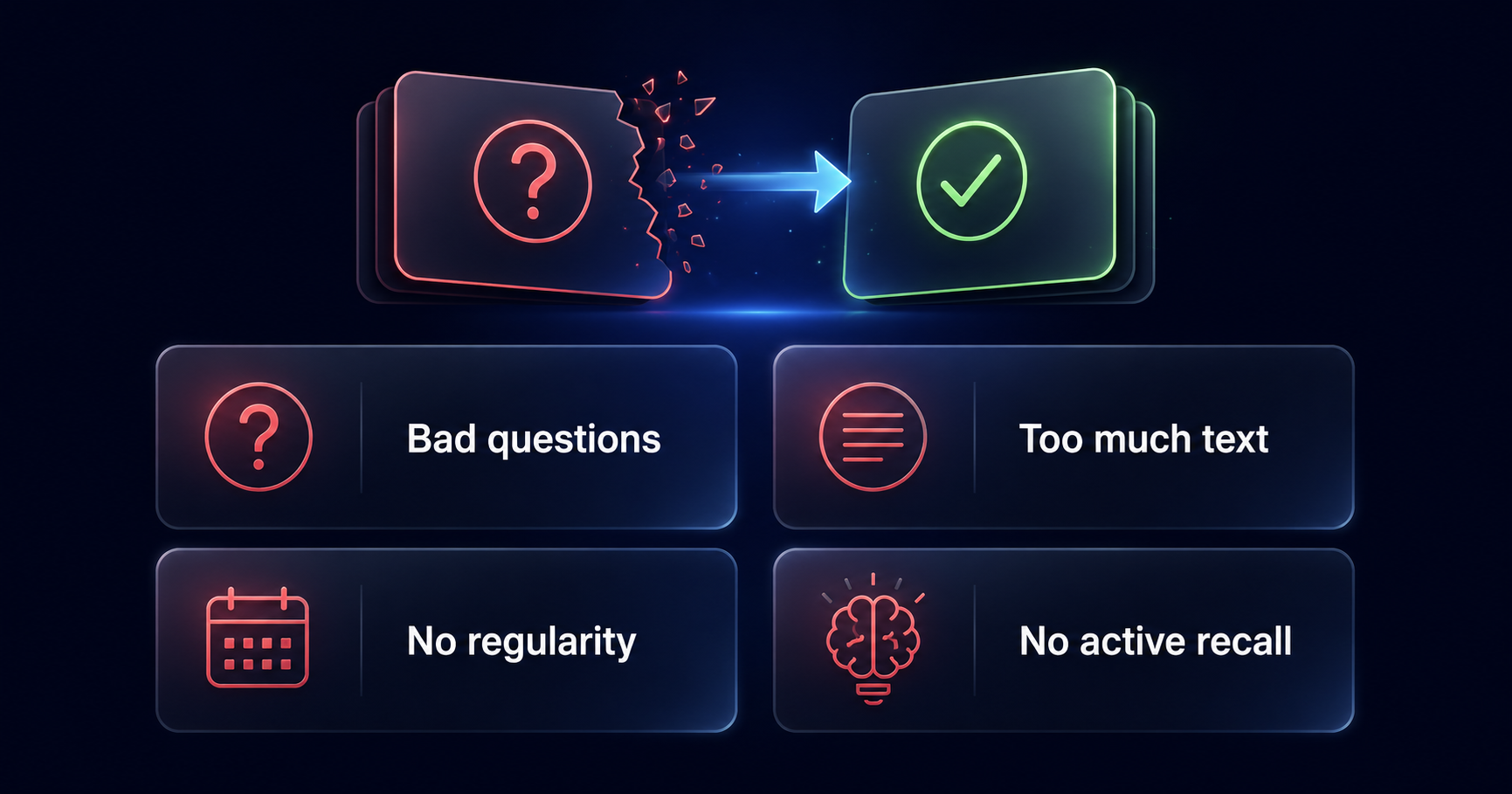
Why Flashcards Don't Work (And How to Fix It)
It's almost always one of four things: bad questions, too much text, no regularity, or no active recall. Here's how to diagnose and fix each one.
Read article
How to Learn Formulas with Flashcards: A 4-Part Card System
A formula is really four facts: the expression, when it applies, a worked example, and the mistake it invites. Four small cards beat one giant one.
Read article
How to Use Law Flashcards: Terms, Statutes, Cases & Bar Exams
Five ways law students and lawyers make flashcards work: legal terms and definitions, statutes and codes, case law, bar exam prep, and long-term retention.
Read article
How to Use Medical Flashcards: Anatomy, Pharmacology & Protocols
Five ways doctors and medical students make flashcards work: anatomy, pharmacology, symptoms and differentials, clinical protocols, and long-term retention.
Read article
How to Use Flashcards for IT Learning: Commands, Algorithms & Interviews
Five ways to make flashcards earn their keep in IT: commands and shortcuts, algorithms and complexity, technical definitions, interview prep, and certification exams.
Read article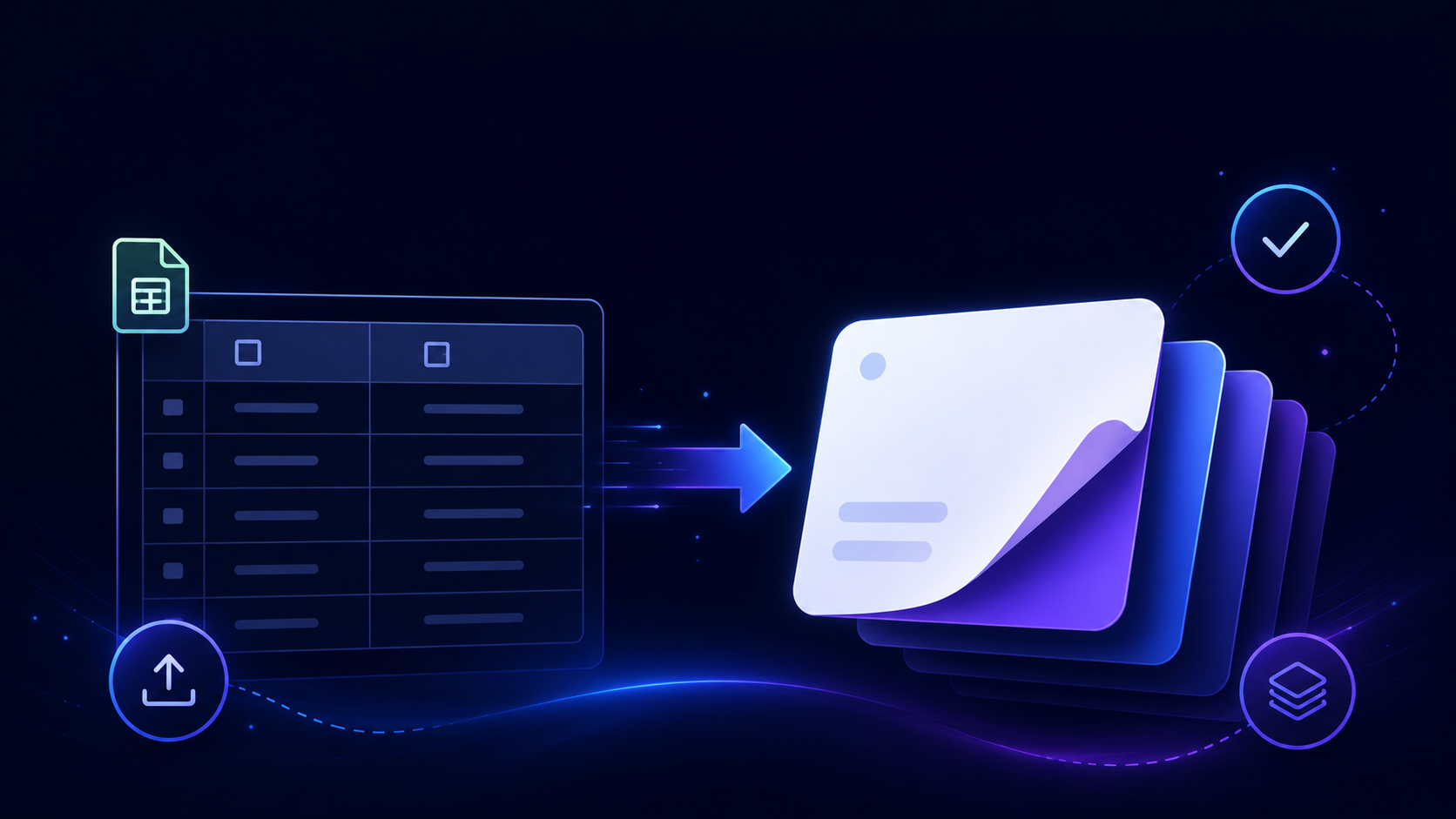
How to Import Flashcards from a CSV File into Repetit
The exact CSV format Repetit expects, how to prepare a clean file, the mistakes that break most imports, and the import steps themselves.
Read article
How to Start Learning with Repetit: A Complete Beginner's Guide
Your first launch, your first collection, your first card, your first review, and syncing across devices — everything you need in ten minutes.
Read article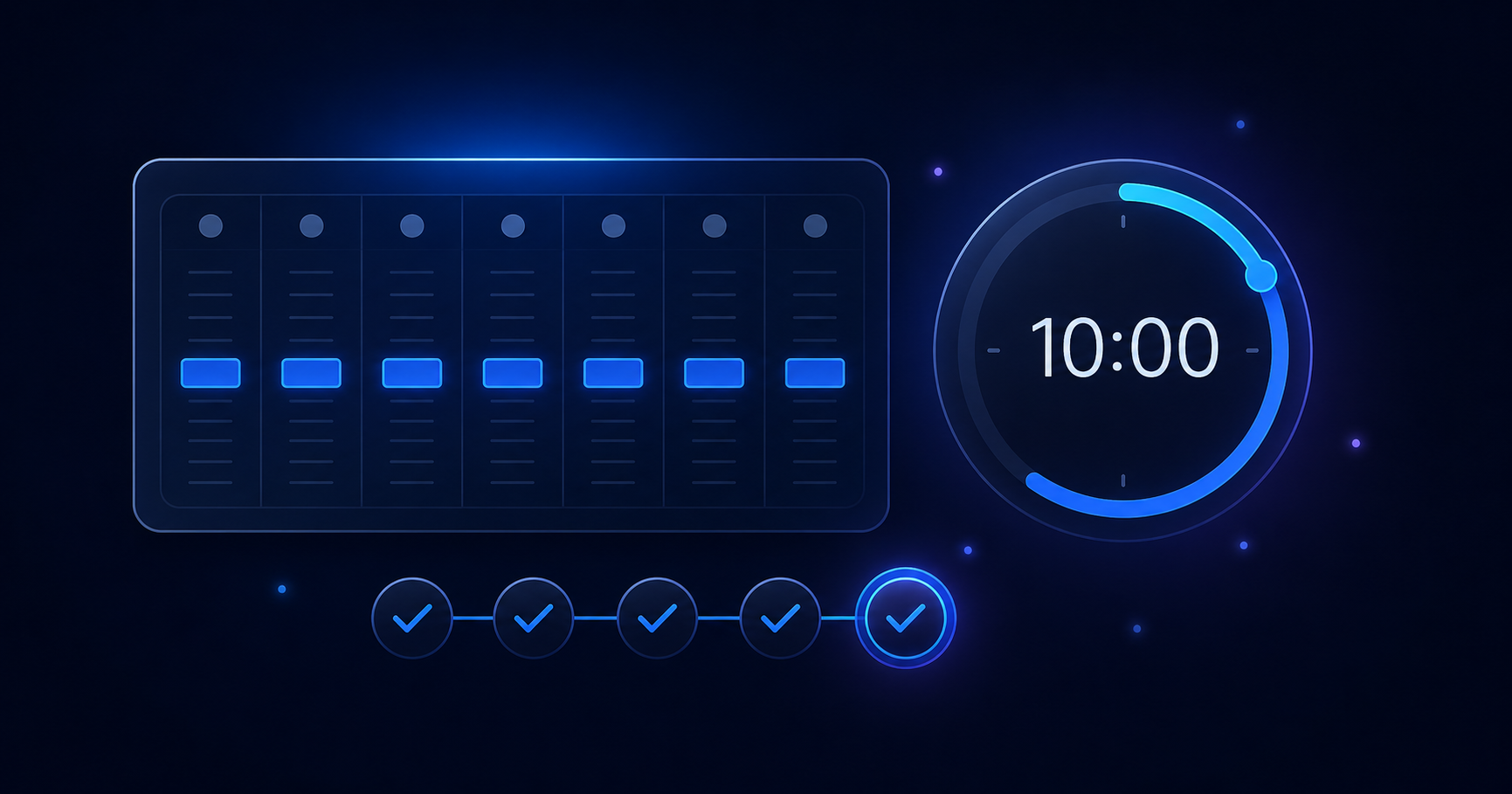
Microlearning: How to Study 10 Minutes a Day and Stick With It
Why 10-minute daily sessions beat occasional long study blocks, plus a sample weekly schedule you can copy directly.
Read article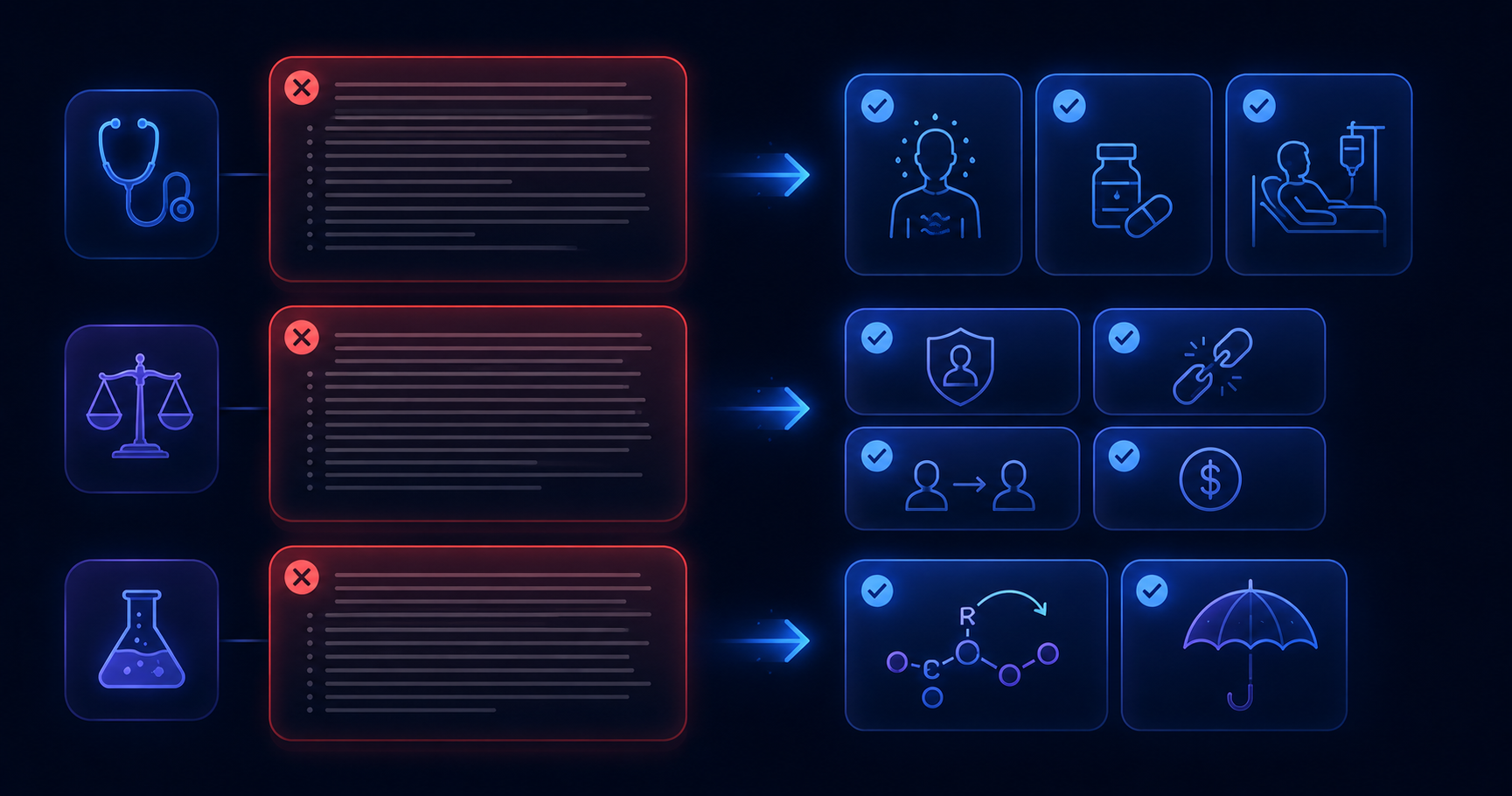
How to Memorize Medical, Legal, and Chemistry Terms
How to turn dense, jargon-heavy definitions into flashcards that stick, with real examples from all three fields.
Read article
Memory Palace and Flashcards: How to Combine the Two Methods
What the method of loci actually is, when it helps most, and how to pair it with spaced repetition for long-term retention.
Read article
Sleep and Memory: Why Reviewing Right Before Bed Really Works
How sleep consolidates what you just studied, why reviewing right before bed has an edge, and the nighttime habits that quietly undo it.
Read article
Why We Forget: 5 Causes of Forgetting and How to Improve Memory
The 5 real reasons memories don't stick — no repetition, no context, stress, poor sleep, and overload — and what actually fixes each one.
Read article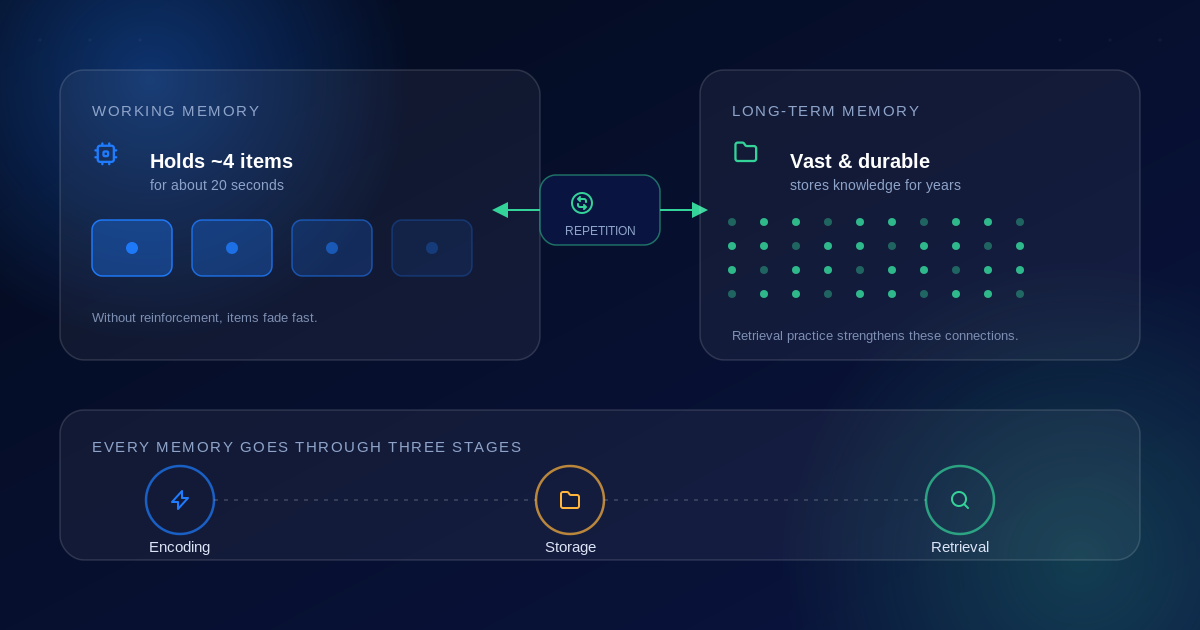
How Memory Works: Types of Memory and Why Repetition Matters
A simple explanation of working memory and long-term memory, and why repetition is what makes new information stick.
Read article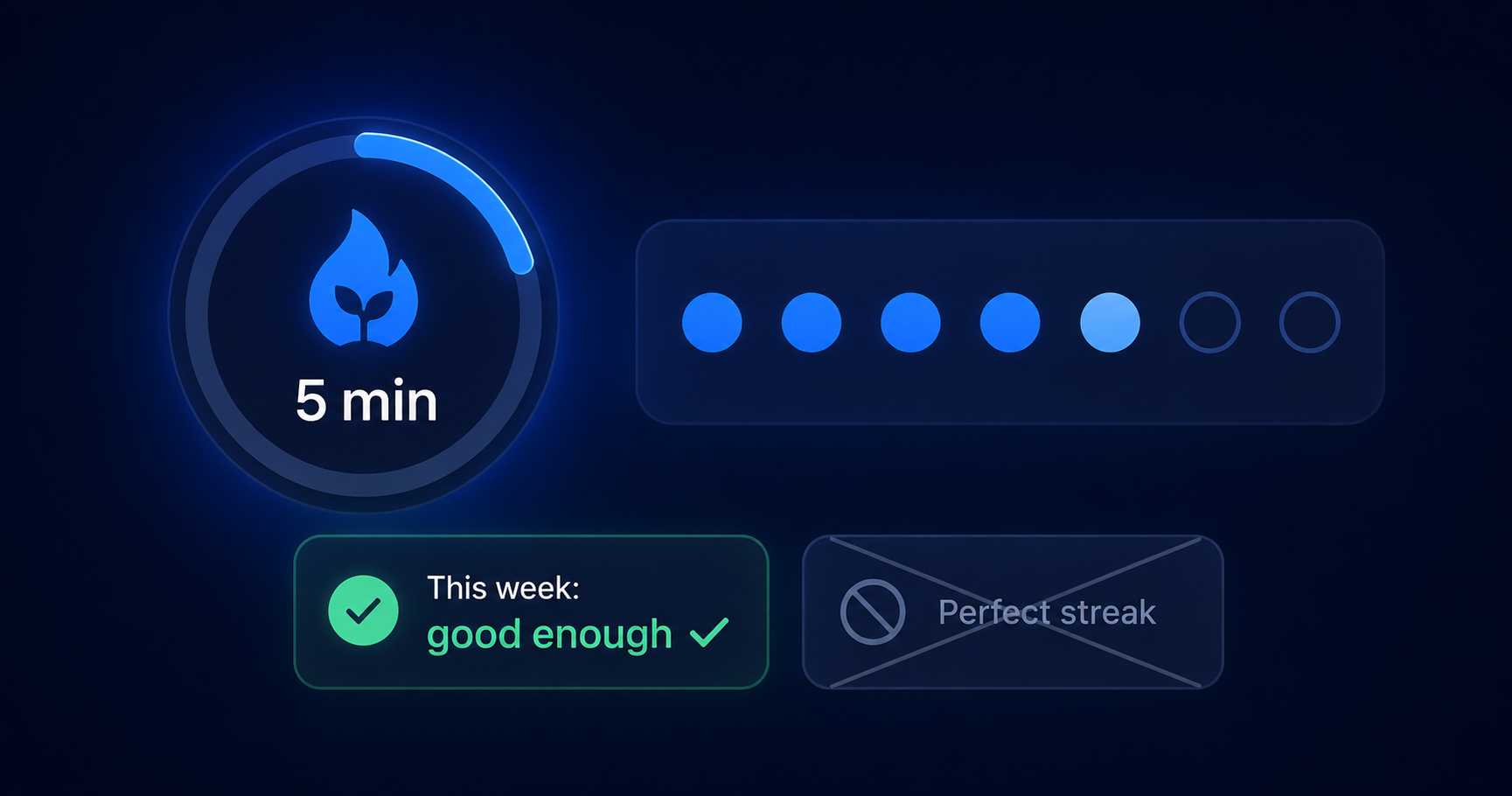
How to Not Quit Learning After the First Week
Why a 5-minute minimum habit, soft goals, and a simple progress tracker keep you going past day seven.
Read article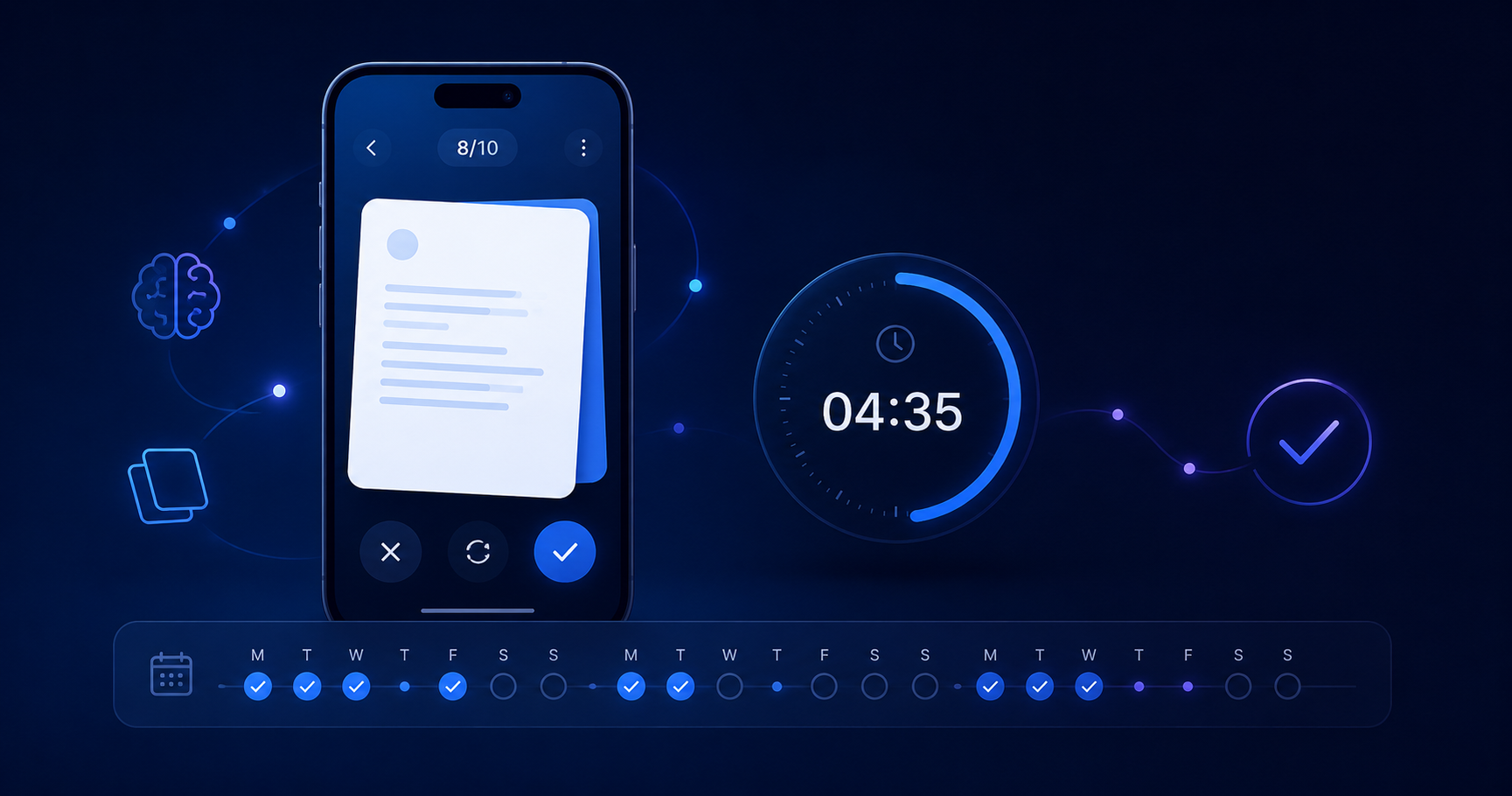
How to Study Flashcards Every Day Without Getting Tired
Build a daily flashcards habit that lasts: short sessions, sensible limits, real rest, and review that never piles up.
Read article
How to Avoid Student Burnout: A Guide to Studying Without Stress
How to plan realistic sessions, take real breaks, and set achievable goals so you stay productive without burning out.
Read article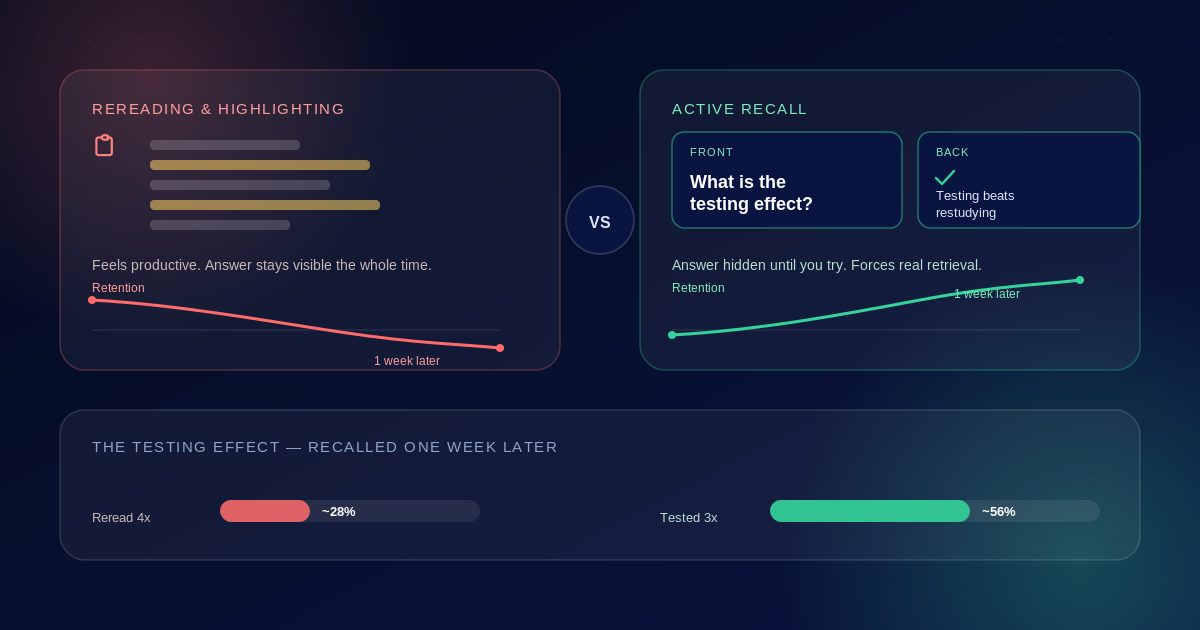
Active Recall: Why Remembering Beats Rereading
What active recall is, why the testing effect makes it so powerful, and how to practice it every day using flashcards.
Read article
The Testing Effect: Why Practice Testing Beats Rereading
What decades of research reveal about why checking what you know beats reviewing it, and how to apply it with flashcards.
Read article
How Many Flashcards Should You Study Per Day?
The optimal daily flashcard load for beginners, regular students, and intensive exam prep — plus the warning signs that you've taken on too much.
Read article
How to Prepare for Exams with Flashcards
A concrete plan: how to break your syllabus into cards, how much to review each day, and exactly what to do in the final week before the exam.
Read article
How to Learn Japanese Kanji with Flashcards
A kanji rarely has one reading — it usually has several, and the word decides which one applies. Here's how to card meaning, readings, and context correctly.
Read article
How to Learn Chinese Characters with Flashcards
Radicals, meaning, reading, and stroke order — how to card each layer of a Chinese character correctly, with real card examples and a review order that works.
Read article
How to Not Forget a Language After a Break
The vocabulary you built doesn't have to disappear. Here's how little review it actually takes to keep a language alive — and how to set up maintenance mode in 10 minutes.
Read article
Translation or Context: Which Flashcards Work Better?
A real comparison of word → translation cards vs. context-sentence cards for language learning — with examples and a rule for when each one wins.
Read article
Frequency Dictionaries: Which Words to Learn First
100 words can cover half of everyday speech. Here's how frequency dictionaries work, and how to pick your first 500–1000 words instead of a random list.
Read article
How to Learn 1000 Words in 3 Months (Without Burning Out)
A realistic 90-day plan for learning 1000 words — daily word targets, a review system that scales, and how to avoid burning out at week 6.
Read article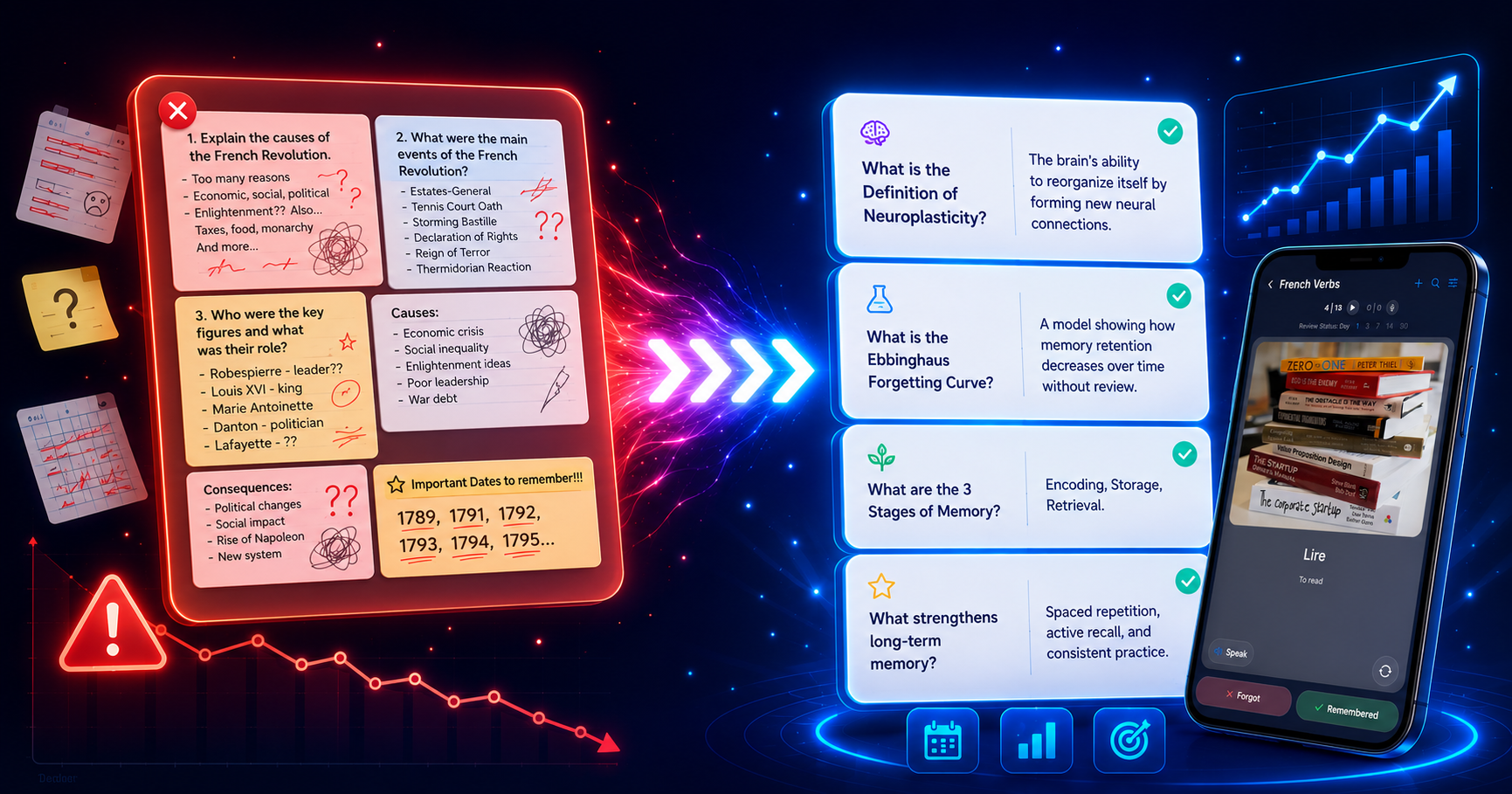
10 Flashcard Mistakes That Kill Your Retention
Ten flashcard mistakes that quietly wreck your recall — with bad-vs-good card examples and a concrete fix for each one.
Read article
Why Spaced Repetition Works: The Science of Smarter Memorization
We forget most of what we learn within days. Here's why spaced repetition beats cramming — and how to start using it today.
Read article
Flashcards for Learning English: A Complete Beginner's Guide
Which words to learn first, how to write the cards, and why spaced repetition is the fastest route to a large English vocabulary.
Read article
The Ebbinghaus Forgetting Curve: Why You Forget — and How to Stop
You forget 70% of new information within 24 hours. Ebbinghaus proved it in 1885. Here's what the forgetting curve reveals — and how spaced repetition reverses it.
Read article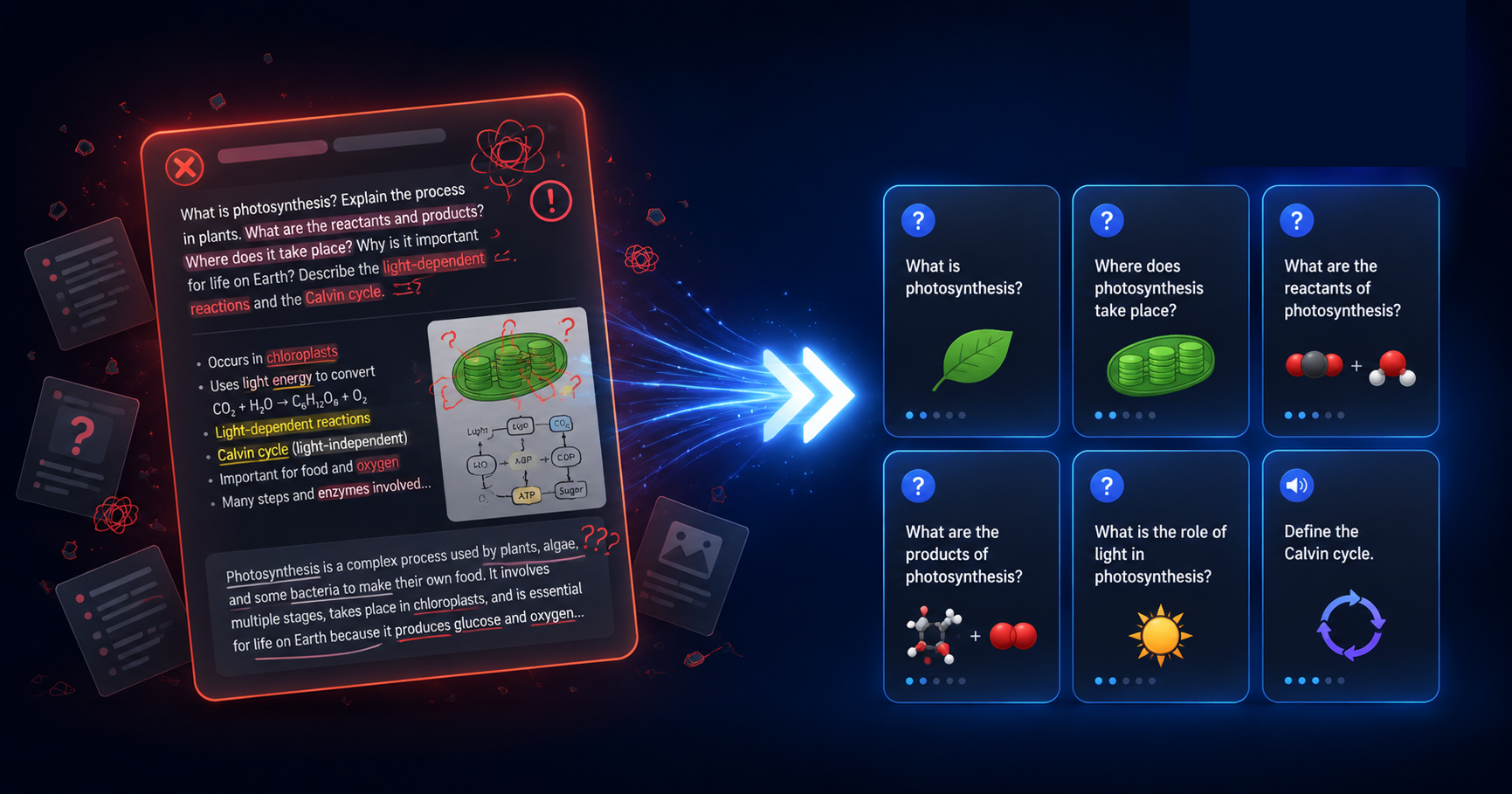
How to Make Effective Flashcards: 9 Rules That Actually Work
Most flashcards are written wrong. Here are 9 rules with before-and-after examples that make the difference between cards that stick and cards you keep failing.
Read article
Images, Audio & Sketches in Flashcards: Why Multimedia Memory Works
Text-only cards use one memory channel. Add an image and you get three. The science of dual coding, picture superiority, and audio memory — with real use cases.
Read article
Minimum Information Principle: Why One Card = One Idea
Why cards with multiple facts always fail — and how splitting them into atomic units transforms your review results. With 8 before-and-after examples.
Read article
How to Build a Spaced Repetition Review Schedule: Step-by-Step Guide
Templates and step-by-step instructions for building a review schedule that sticks — for students, language learners, and professionals.
Read article
The SM-2 Algorithm: How Spaced Repetition Works Under the Hood
A clear technical breakdown of SM-2 — the algorithm behind spaced repetition. Intervals, ease factors, quality ratings, and what it means for how you study.
Read article
Spaced Repetition vs Cramming: What the Science Actually Says
6 studies. Two methods. One clear winner for long-term memory — and a nuanced answer for when cramming actually makes sense.
Read article
What Is Spaced Repetition — and Why It Works Better Than Cramming
Spaced repetition is the most effective memorization method ever tested. Learn how it works, what the science says, and how to start using it today.
Read article
The Fastest Way to Build Vocabulary: Flashcards + Spaced Repetition
Learn 50 words, forget 40. Sound familiar? Here's why flashcards with spaced repetition are the most efficient method for vocabulary retention — and how to set it up.
Read article
How Professionals Use Spaced Repetition to Stay Sharp
Industry terminology, certification prep, onboarding, continuing education — learn how professionals use spaced repetition to retain knowledge without long study sessions.
Read article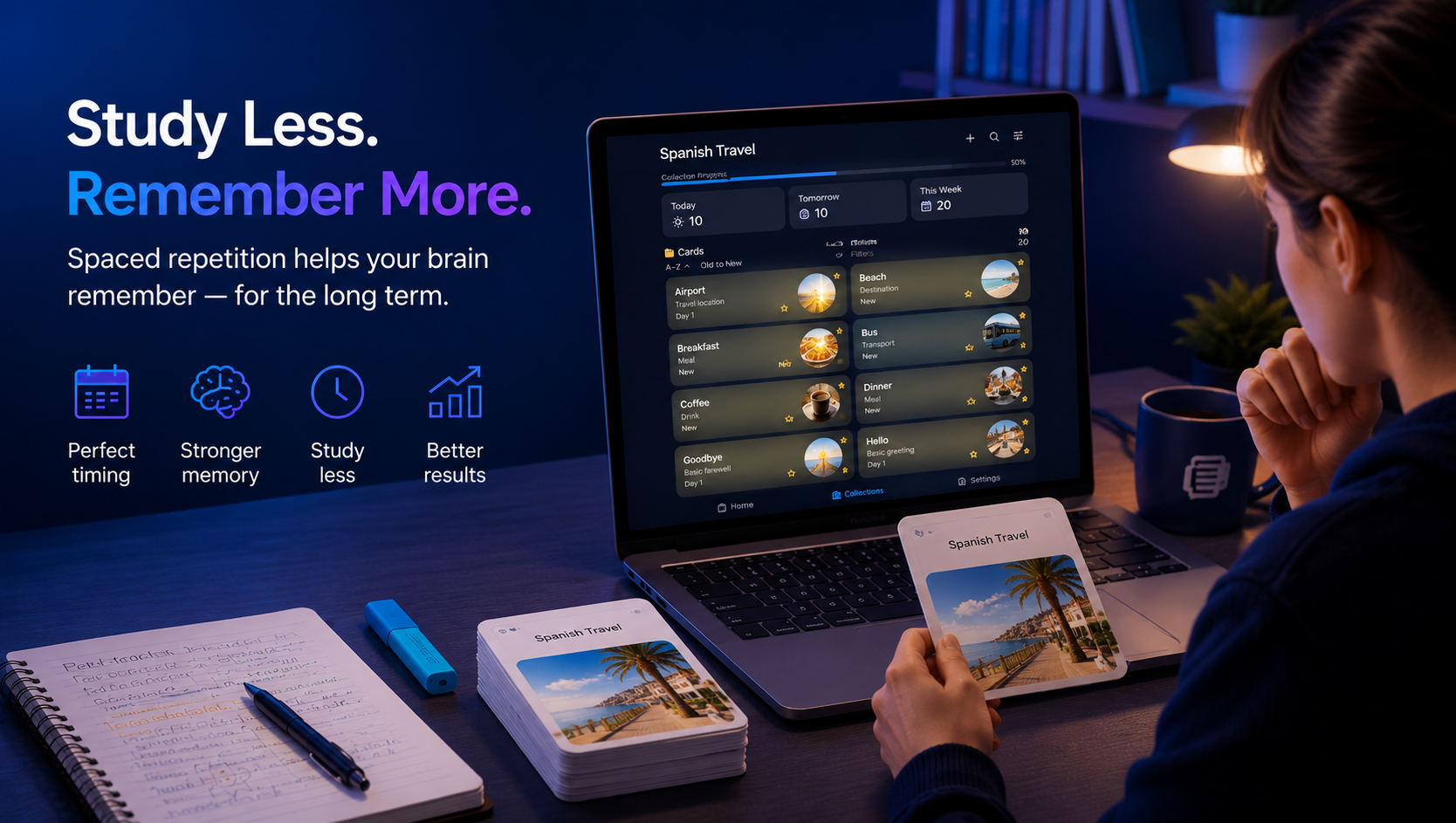
How Spaced Repetition Helps Students Study Less and Remember More
Stop cramming the night before. Learn how spaced repetition works, why it beats re-reading, and how to use Repetit to pass exams while studying less.
Read article